
Showing posts with label Writing. Show all posts
Showing posts with label Writing. Show all posts
Monday, 13 September 2021
6 Sentence Story
LI: Use 6 sentences to set up the structure of a narrative

To help us put our learning this week together we were asked to write a 6 sentence story. This story will be used as the text in our manga comic DLO.

Manga Comic
LI: To illustrate our writing in the style of anime/manga 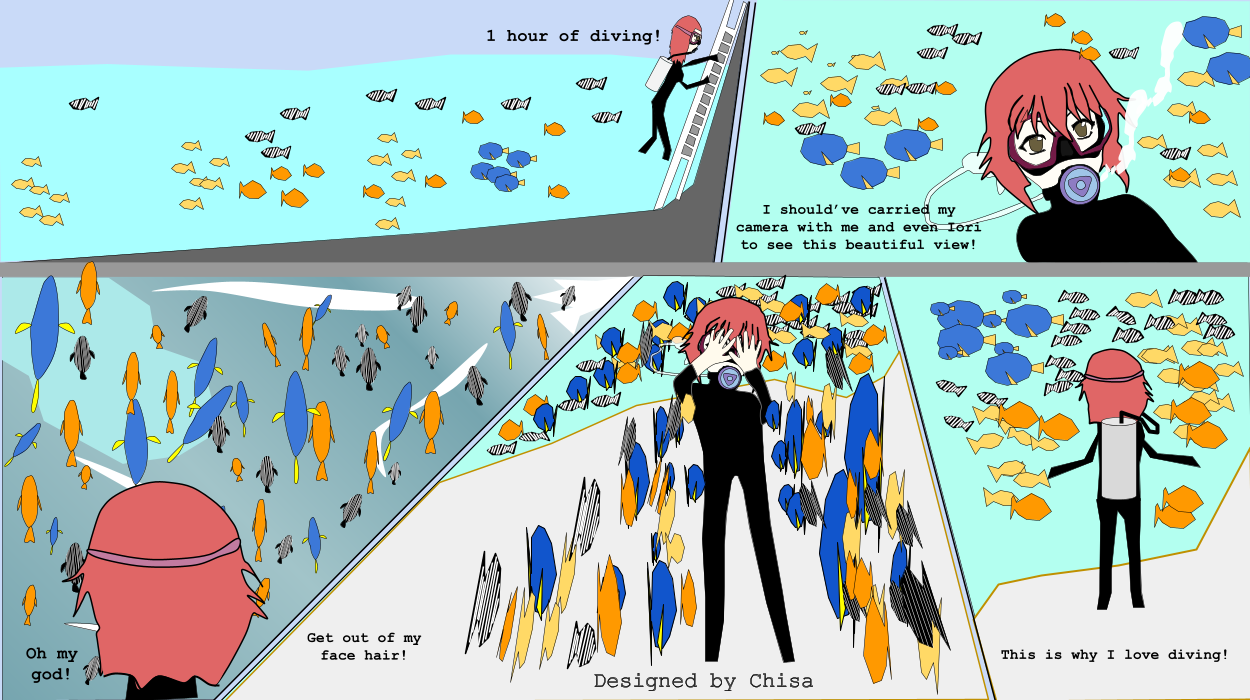
Our challenge today was to turn the events in our 6 sentence stories into a manga comic strip. This activity was really fun because I was able to be creative by designing my own comic.
Our challenge today was to turn the events in our 6 sentence stories into a manga comic strip. This activity was really fun because I was able to be creative by designing my own comic.
Cinquain Poem
LI: To write a cinquain poem to describe an anime characte
This week we have been exploring the world of anime and manga. Our challenge today was to write a cinquain poem to help us strengthen our connections to description that describes our favourite anime/manga character. A cinquain poem has 5 lines. Each line has a different purpose. Line 1 is a noun which is a name. Line 2 has 2 adjectives taht describe the noun. Line 3 has 3 verbs that end in ‘ing’ and describe the actions. Line 4 is a noun phrase which is a group of words (not a sentence) that go together to describe the noun. Line 5 is a synonym which is a word with a similar meaning to the noun.
Tuesday, 24 August 2021
Things that annoy me
LI: To write a list poem that describes a topic by painting a picture with your words.
Today for writing I have created my own list poem about things that annoy me. A list poem is a poem that is used to create a picture using our experiences from our own lives by listing an item, people, and ideas. I chose this topic because I experience it most of the time. One of the examples that I usually have to deal with is when my internet is really slow.
I enjoyed writing this list poem because it allowed me to explain what annoys me.
Tuesday, 29 June 2021
Imagination
LI.to edit our writing using DRAFT.

This week for writing we have done another abstract poem in pairs. An abstract poem is a poem a about an abstract noun. An abstract noun is something that exist but you can’t touch it (happiness, failure, trust, etc)
In this task we need to include the five senses, punctuations, complex sentences, metaphor, simile, etc. After writing this poem we used the DRAFT process which helped us make our writing better for other people to understand.
The structure of this poem is defining what the abstract noun. Then the second line starts with using one of the senses. Lastly write four more lines starting with the abstract noun using the other four senses
Something I found interesting about this was that when we edited it explained the abstract noun better
In this task we need to include the five senses, punctuations, complex sentences, metaphor, simile, etc. After writing this poem we used the DRAFT process which helped us make our writing better for other people to understand.
The structure of this poem is defining what the abstract noun. Then the second line starts with using one of the senses. Lastly write four more lines starting with the abstract noun using the other four senses
Something I found interesting about this was that when we edited it explained the abstract noun better
Thursday, 24 June 2021
Life
LI.To write an abstract noun senses poem.

Today we had a writing task with the whole classroom for Abstract Noun poems.In this activity we learnt how to understand what a metaphor is and how we use them writing.We worked in groups to collaborate this challenge and make into a powerful eye catching DLO.
An abstract noun is one that refers to an idea,quality or state(You cannot see,hear,touch or smell an abstract noun).
An example of abstract noun is the poem myself and my group put together by working together and learning from each other.
The five senses are see, hear, smell, touch, and taste.
A metaphor is a comparison to two things without using as or like.
An example of a metaphor is where you compare to things together without using like or as.
Something we found interesting about doing this task was learning how to properly structure an abstract noun poem.
Today we had a writing task with the whole classroom for Abstract Noun poems.In this activity we learnt how to understand what a metaphor is and how we use them writing.We worked in groups to collaborate this challenge and make into a powerful eye catching DLO.
An abstract noun is one that refers to an idea,quality or state(You cannot see,hear,touch or smell an abstract noun).
An example of abstract noun is the poem myself and my group put together by working together and learning from each other.
The five senses are see, hear, smell, touch, and taste.
A metaphor is a comparison to two things without using as or like.
An example of a metaphor is where you compare to things together without using like or as.
Something we found interesting about doing this task was learning how to properly structure an abstract noun poem.
Friday, 18 June 2021
Shoe Narrative
LI: To use the 5 senses and personfication to help us paint a picture with words

Today for writing we have been recapping about how to write a good narrative. A narrative is a made up story that people tell. With a partner we planned what the story was going to be about, and use that idea to write a good narrative. The structure of the narrative is TOPES (Title, Orientation, Problem, Explain, Solution, and Mora/Coda). Something I found interesting was that it is better to plan instead of just writing a narrative because you can look at the notes for a guide.
Tuesday, 15 June 2021
Dialogue Text
LI.to understand how to use and correctly punctuate dialogue when writing.
This week for our writing class we have we recapped what a dialogue text is about, and how to use it.
This is our DLO we have worked on to reflect our understanding of the purpose of dialogue in writing.
An example of how to use dialogue is:
“Are you new here?” questioned Mahdi.
“Yes, I am new here, can you please take me to room 7?” replied James
“Sorry I’m actually new here. I was about to ask you if you wanted to be my friend,” awkwardly said Mahdi.
Something I found interesting was that we can make more interesting words instead of writing said.
Wednesday, 2 June 2021
Cinquain Poem
LI: To write a cinquain poem to describe a polar bear.

We have been learning to write cinquain poems to help us strengthen our connections to description. A cinquain poem has 5 lines. Each line has a different purpose. Line 1 is a noun which is a name. Line 2 has 2 adjectives taht describe the noun. Line 3 has 3 verbs that end in ‘ing’ and describe the actions. Line 4 is a noun phrase which is a group of words (not a sentence) that go together to describe the noun. Line 5 is a synonym which is a word with a similar meaning to the noun.
Friday, 14 May 2021
A Moment in Time
LI: To use the language features and structure of published poem to help use write our own poem.

We looked at the language features and structure of a poem called ‘A Moment in Time’ and used our experiences from camp to follow the structure and collaboratively create our own moment in time poem.
To describe what we heard, what we saw, how we felt and what we wondered we used our senses, adjectives and adverbs.
Ajectives are words that describes a noun.
We looked at the language features and structure of a poem called ‘A Moment in Time’ and used our experiences from camp to follow the structure and collaboratively create our own moment in time poem.
To describe what we heard, what we saw, how we felt and what we wondered we used our senses, adjectives and adverbs.
Ajectives are words that describes a noun.
Adverbs are words that describes a verb.
I found this interesting because I got to use powerful words that made my poem more powerful.
I found this interesting because I got to use powerful words that made my poem more powerful.
Settings
LI: To use powerful words to describe a setting so that it paints a clear picture in the mind of the reader
To do this we looked at an image and thought of 10 words that described and showed what we could see. Once we had thought of the adjectives or adverbs we used our smart searching skills to help us find synoymns that made our descriptions clearer.
I found this interesting because there were more powerful words than the words that I have written.
To do this we looked at an image and thought of 10 words that described and showed what we could see. Once we had thought of the adjectives or adverbs we used our smart searching skills to help us find synoymns that made our descriptions clearer.
I found this interesting because there were more powerful words than the words that I have written.
Thursday, 8 April 2021
5 minutes of camp
LI: To recount a 5 minute snapshot of one experience you had at camp
The SCARY High Beams.
“Does she have 3 C’s? Helmet secured?” said the instructor. “Yes!” replied my teammates. “You can start now!” said the instructor. My whole body was shaking in fear as I climbed the ladder step by step. My face felt hot, and my hands became sweaty. As I finished climbing the ladder I started to climb the staples that were attached to the pole. My heart beated even more as I knew my teammates were watching behind me.
From this point I had finished climbing the staples. Now I needed to walk on the log that was metres apart from the ground. Everyone in my group watched me as I gripped tightly on the rope that was being held by the instructor and another teammate. As I walked slowly I could feel my legs shiver in fear, but my teammates encouraged me that made me a bit confident.
Not long after I was able to reach the other side of the pole, and I hugged it and said I love you. I was still scared at that moment as I still needed to go back in the middle to get down. The instructor told me if I would like to dance or do something high up in the air. I responded with fear but my instructor encouraged me to do 5 star jumps on the log.
As I started doing my star jumps I started to feel even more scared. After I finished the star jumps I was ready to go down because my heart was beating even more than when I first started it. While I was going down I could see the raft building activity team coming up the hill and I could see a lot of trees around me.
After I touched the ground I felt proud of myself, and my teammates cheering me.
Wednesday, 24 February 2021
Why do we use TEEL paragraphs?
LI: To understand how TEEL paragraphs can help us structure our information and ideas in a paragraph.
We use paragraphs in our writing to expand on an idea. In LS2 we use the TEEL acronym (title, elaborate, evidence and link) to help us structure our thinking. The example on my DLO shows where each of the structure has been written, and what the TEEL paragraph is.
I found this activity fun because I was able to learn how this is been used to write a paragraph.
Thursday, 18 February 2021
Cybersmart | Kawa of Care
LI.to be cybersmart and use our devices and clever ways in order to learn, create, and share.


Being cybersmart means to be knowledgeable towards a device in order to keep it secure and safe.
Understanding the rules of the Kawa of Care, can help someone to learn, create and share.
Some of the rules state that a person should: never have food around the netbook, charge near a wall to contain a risk or hazard, placing a netbook away from the edges on a table, use two hands when carrying a netbook around, put the chromebook in a case when going outside with it and more. These rules ensure that the netbook can remain protected.
Knowing the keyboard can assist with how fast someone can type and finish their work. When someone memorizes their keyboard it will be easy to complete a task.
Being cybersmart can help to learn, create and share a person’s work.
Understanding the rules of the Kawa of Care, can help someone to learn, create and share.
Some of the rules state that a person should: never have food around the netbook, charge near a wall to contain a risk or hazard, placing a netbook away from the edges on a table, use two hands when carrying a netbook around, put the chromebook in a case when going outside with it and more. These rules ensure that the netbook can remain protected.
Knowing the keyboard can assist with how fast someone can type and finish their work. When someone memorizes their keyboard it will be easy to complete a task.
Being cybersmart can help to learn, create and share a person’s work.
Monday, 7 December 2020
Writing | Commanding Conversation
Commanding conversation is a can-do where people practice writing conversations.
I have created two conversations which are the little kids arguing and the man asking the woman question.
Commanding conversation is a good way for me to practice writing dialogues.
LI.to write a descriptive conversation.
Friday, 20 November 2020
Writing | Storyboard
Storyboards are pictures that show characters, the movements of the characters and the camera angles.
When creating a storyboard the picture should have enough details so the reader can understand where the setting is. If there are enough details in the drawing people will mostly understands it.
Storyboards include scene number on side of each picture. Storyboards sometimes include short sentences when it doesn't give enough details to the picture. When writing a story board it doesn't give any dialogue. It also gives camera angles to the drawings.
It is a good idea to have a storyboard so that actors can understand their positions in the story.
LI.to create a storyboard from a narrative.

Tuesday, 10 November 2020
Screenplay | Writing
Screenplays are scripts that has mostly have speech and actions through out the scenes.
In a screenplay there are parts like scenes, names, actions, and speech.
The scenes should be written in all caps. The name should be in the middle of the caps written in all caps. The speech should be written in the middle of the page, and the action should be written on the left hand side.
It is important to know how to write a screen play so an actor can understand where their lines are and what they should say.
LI.to convert a story into a screenplay/script.
Friday, 6 November 2020
Narrative | Writing
Narratives are made up stories. Narrative uses third person words and past tense. The structure of the narrative is TOPES.
To plan a narrative, first brainstorm as many ideas as possible, then chose one that is best.
Next write who the characters are going to be. Then write the problem that is going to happen in the story. Events is usually written to lead to the solution, the solution can be failed or succeeded.
When there are too much dialogue in a narrative people add more narration. When there are too much narration people add more dialogue.
To write a narrative, write sentences and paragraphs using the ideas.
It is important to know how to plan a narrative so people can learn each process of it.
LI.to write a short narrative.
Thursday, 29 October 2020
Writing | Narrative
Narratives are made up stories. Narrative uses third person words and past tense. The structure of the narrative is TOPES.
To plan a narrative, first brainstorm as many ideas as possible, then chose one that is best.
Next write who the characters are going to be. Then write the problem that is going to happen in the story. Events is usually written to lead to the solution, the solution can be failed or succeeded
To write a narrative, write sentences and paragraphs using the ideas.
It is important to know how to plan a narrative so people can learn each process of it.
LI.to write a short narrative.
Friday, 23 October 2020
Narrative Plan | Writing
This week we have been learning to plan a narrative.
First we reminded ourselves what the structure of a narrative was, which is TOPES. TOPES stands for title, orientation, problem, events, and solution. Orientation talks about who, when, what, and why? The problem is something that goes wrong in the story, the events talks about what the characters do in order to solve that problem, and the solution talks about the last things the characters do to solve the problem.
Next we watched two films. We then talked about where the title, orientation, problem, events, and solution were.
Then we listed different ideas for our film, and took out ideas that we didn't want.
When we chose an idea, we thought about how we could turn that idea into a short narrative, that would only be one A4 page long if it was been written, and 30s - 2m long if it was filmed. We then started to planned our narrative and wrote our ideas into sentences.
I enjoyed planning the narrative and I also liked about my idea that I have chosen.
LI:To write a short story that can be made into a film.
LI.to learn and practice experimental methods.
Subscribe to:
Posts (Atom)